Scientists at Newcastle University (NCL) have successfully 3D printed human corneas for the first time. Gelatinous and multicellular, the artificial corneas are valuable steps towards much needed solutions for the millions of people suffering from eye disease and severe damage around the world.
A vivid solution
The cornea is a vital part of human vision; it acts as the transparent outer layer of the eyeball, refracting and bending light in order to focus eyesight. With over 10 million people requiring corneal transplants worldwide, scientists, including those from the Instituto de Investigación de Biomédica del Hospital La Paz (IdiPAZ) have been exploring methods to end the shortage of global cornea donations through 3D bioprinting.
Progress has been made in aiding human eyesight through 3D printing as seen by University of Canterbury student Logan Williams’ Polar Optics 3D printed contact lenses. However, many are still suffering from blindness caused by corneal diseases.
To remedy the shortage of corneas available Che Connon, Professor of Tissue Engineering at Newcastle University, and his research team created a printable bioink solution from donor stem cells, alginate, and collagen.
Ten-minute corneas
The specially developed bioink has been successfully 3D printed in under ten minutes in concentric circles to mimic the shape of a human cornea.
“Many teams across the world have been chasing the ideal bio-ink to make this process feasible,” comments Professor Connon, “Our unique gel keeps the stem cells alive whilst producing a material which is stiff enough to hold its shape but soft enough to be squeezed out the nozzle of a 3D printer.”
The researchers previously used a similar hydrogel in an experiment to keep cells alive at room temperature for several weeks. From this test, they were able to identify a process that allowed cells to grow within a bioink solution.
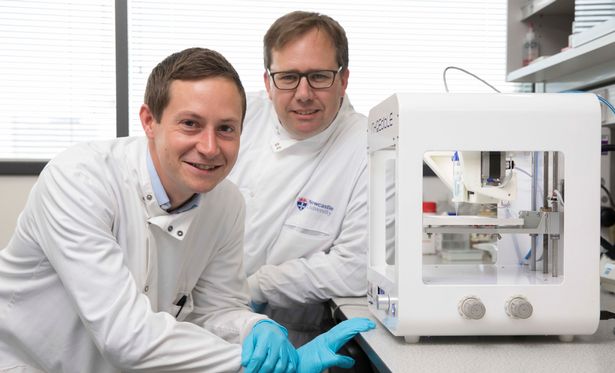
Guest researcher Abigail Isaacson, was one of the scientists that confirmed that a cornea could be built and rapidly produced to match a patient’s specifications by scanning the dimensions of tissue from an actual eye.
Professor Connon added,“What we have shown is that it is feasible to print corneas using coordinates taken from a patient eye and that this approach has potential to combat the worldwide shortage.”
The 3D printed corneas are now undergoing further testing as scientists estimate that it will be several years until they are suitable for transplantation.
Stay up to date with all the latest 3D bioprinting developments at 3D Printing Industry on Twitter and Facebook. Subscribe to our regular newsletter here.
Looking for a change of scenery? Register for upcoming 3D printing job updates here.
Featured image shows Dr. Stephen Swioklo, holding 3D printed cornea with Professor Che Connon (right). Photo via Newcastle University.
DWK Life Sciences, a leading manufacturer of premium lab equipment, has released its first ever metal 3D printed product.
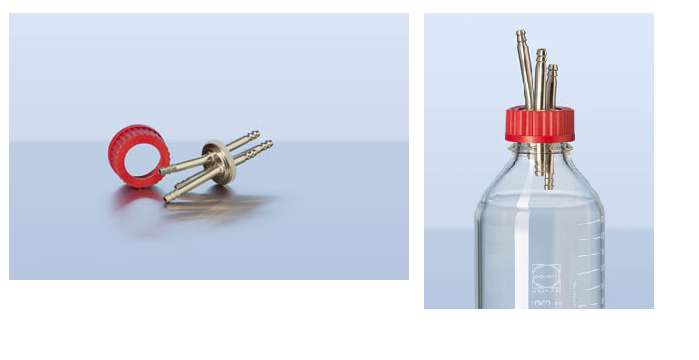
Used in laboratories to facilitate the secure transfer of liquids, the new bottle connector cap has been brought to market in record time, and acts as a proof of concept that powder bed fusion (PBF) can be applied to parts for sterilized environments.
Conventional to additive manufacturing
DWK Life Sciences was formed in the summer of 2017 in a merger between the DURAN Group, Wheaton Industries and Kimble Chase, all former manufacturing companies of high-quality laboratory glassware and equipment.
The original range of Duran GL 45 Multiport Connector Caps are manufactured using conventional processes such as machining and welding. However, as a result of the production team’s implementation of additive manufacturing, they were able to create a newer, fully functional version of the product, in a fraction of the time.
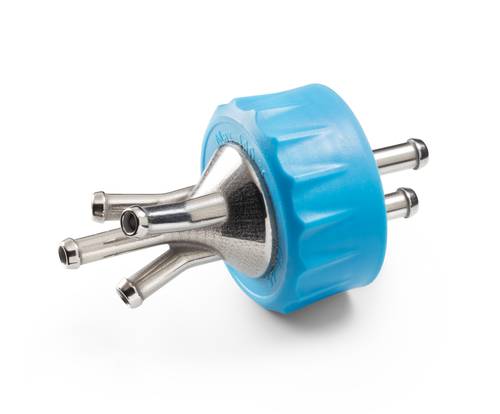
The 3D printed connector cap’s production was reduced in cost and weight when compared to an original product. A welded product weighs approximately 150 grams, while a 3D printed version weighs around 50 grams.
“Development of new labware, especially glass products, is traditionally a slow process,” explains Alistair Rees, DURAN product manager, “In contrast, the development time for the 3D printed connector cap was very short: from the first idea to the final printed product only took about two months.”
A batch of the caps was 3D printed in medical grade 316L Stainless Steel using an EOS system, and took around 51 hours for completion. After printing, physical and electrochemical processes are used on the surface in the final stage of production. The finished product is intended to be used in chemistry, life science and biopharma laboratories.
3D labware innovation
3D printing has previously been used to create a more timely and cost effective scientific process in laboratories through FieldLab, a 3D printed portable diagnostics lab created by the South African biotech startup, Akili Labs, used to identify disease outbreaks in remote circumstances.
Furthermore, a recent study from the University of Glasgow has proposed the concept of replacing costly labware with a selection of modular, 3D printed plastic vessels accessible through a set of downloadable digital files. This allows users to print and produce their own chemical modules.
The new DURAN Stainless Steel 4-Port Connector Cap GL 45 will be on display at the DWK Life Sciences Stand B7 Hall 4.1, from July 11-15 at the World Forum and Leading Show for the Process Industries, ACHEMA, in Frankfurt am Main, Germany.
For more of the latest 3D printing product developments subscribe to the 3D Printing Industry newsletter, follow us on Twitter and like us on Facebook.
Looking for a change of pace? Register for upcoming 3D printing job updates here.
Featured image shows Stainless Steel Multi-Port Connector Cap GL 45. Photo via DWK Life Sciences.
Former Vietnamese military pilot, Dinh Van Duong recently received bionic 3D printed hands from local 3D printer and software provider, 3D Master Company.
Duong is the sole survivor of an MI-171 helicopter crash, that took the lives of 20 of his fellow soldiers. After 24 complex surgeries, Duong lost all of his limbs and became wheelchair-bound.
In August 2017, upon hearing his tragic story, actor and social activist MC Phan Anh visited wounded soldier, Duong in Hanoi, Vietnam with the promise of getting him functional hands. A month later, Phan Anh visited 3D Master Company, who were eager to sponsor the specialized creation of artificial 3D hands.
Following further months of development involving many iterations and modifications, Phan Anh was able to present Duong with his new hands.

Rehabilitation through 3D innovation
3D Master Company began to develop a bionic prosthesis that would return some mobility in his upper body without causing the need for further amputation. To guarantee a comfortable fit, they began by scanning and converting Duong’s arms into a 3D file, then 3D printed the parts with a Zortrax M200 3D printer.
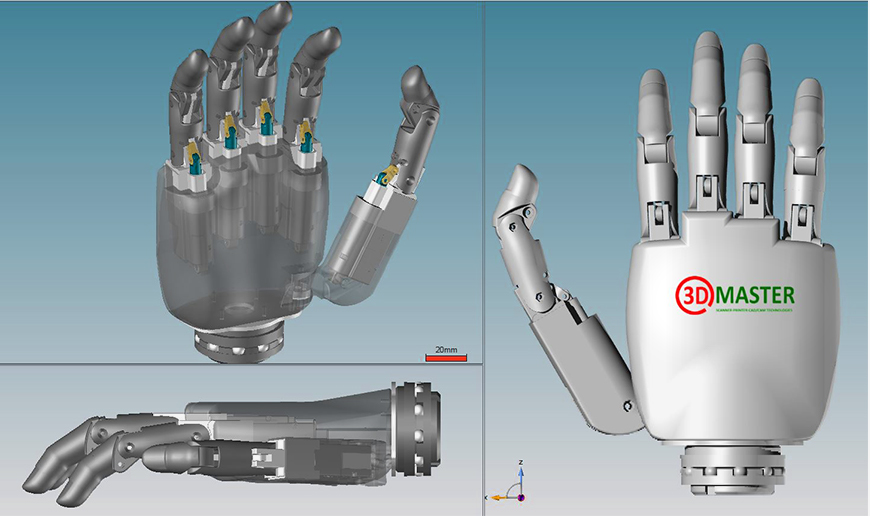
The 3D Master Company team used Zortrax’s Z-ULTRAT filament to create strong and lightweight fingers for the bionic hand. The fingers were then covered with silicon after 3D printing to increase frictional forces when the hand is holding objects. Each finger is controlled by separate motors for optimal mobility.
The bionic arms are complete with circuitry that allows Duong to control their movement. A nerve impulse from the brain is essentially an electric signal that can be detected by sensors. After conversion by a circuit board, the prosthesis responds to Duong’s commands with mechanical movement.
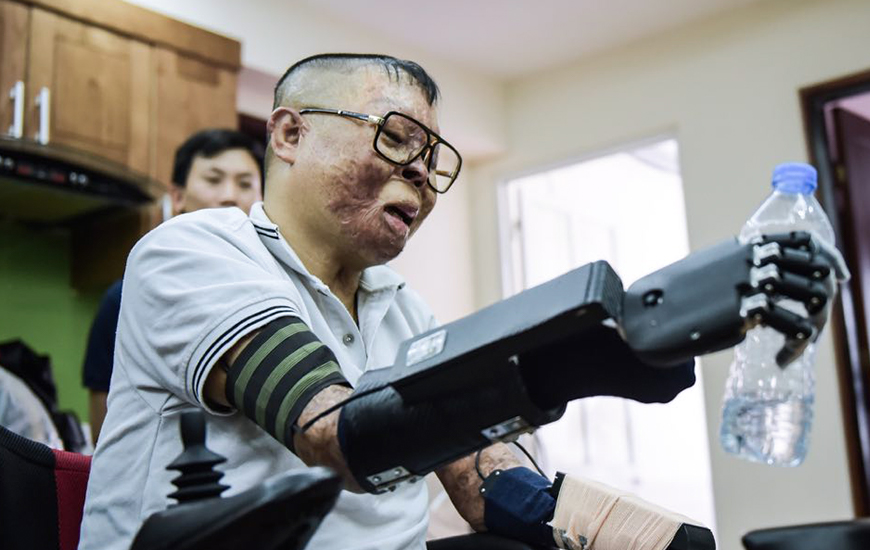
“With this bionic hand, I can hold a bottle of water and pour water into a cup. The first time I used this hand, it was difficult to control it using my thoughts. After being instructed by technicians of 3D Master Company, I can use it with ease and I understand the basic working principle of this prosthetic hand,” Duong said.
The production of the bionic hands cost 40% less than that of regular prostheses thanks to the innovation of 3D Master Company.
3D printing is increasingly used for medical devices. Glaze Prosthetics, a Polish startup offering customized 3D printed prosthetics and who were recently nominated for an award for start-up of the year at the 2018 3D Printing Industry Awards, is also using 3D printing to create a functional replable arm system.
Impressed by the results, Phan Anh has requested that 3D Master Company now produce Duong’s feet as he now wishes to gain more of his independence through 3D printed bionic legs.
“Phan Anh is brave and dares to cope with public opinion to do good for the people,” said Duong.
Phan Anh stated, “In my opinion, we must absolutely respect the appearance of others, people [who] denigrate the body of another person is deserving of condemnation.”
Nguyen Van Cuong, director of 3D Master Company plans to produce 500 more bionic hands using the same process at a projected cost of $3500 per hand. This will also help others afflicted with immobility.
Going global with 3D bionics
Collaborations from the healthcare sector and 3D printed bionics have proved beneficial within developing countries. In 2017, the Enable Community Foundation (ECF) used 3D printing to create prosthetics for amputees in Haiti. The non-profit group aimed to combat the large number of upper-limb (UL) amputees in the country.
Similarly, Open Bionics, UK based startup company developing low-cost bionic hands, conducted a study in 2017 to assess the advantages of using 3D printed medical devices on amputees. This study has been met with positive feedback for the wider use of 3D printed medical devices.
For more stories on the latest medical developments in 3D Printing subscribe to the 3D Printing Industry newsletter, follow us on Twitter and like us on Facebook.
Want to advance your career in additive manufacturing? Sign up to 3D Printing Jobs here.
Featured image shows Duong’s 3D printed hand model. Image via Zortrax
Surgeons at Guy’s and St. Thomas’ NHS Foundation Trust, London, have worked with Stratasys’ 3D printing to support the first successful larger-than-average adult kidney transplantation from father to son.
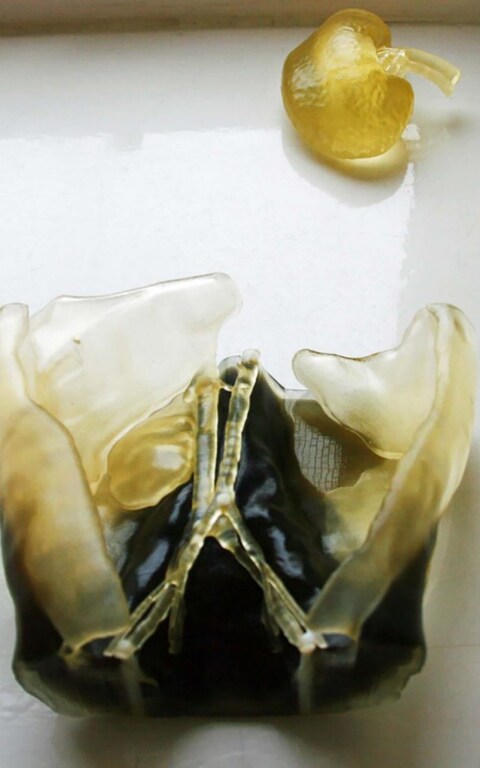
The high-risk procedure was performed with the help of two, true-to-life, 3D printed models, which proved vital to surgical preparation.
The case of Dexter Clark
Two-year-old Dexter Clark was born with severe kidney problems which made him incapable of naturally consuming food. Realizing his need for a transplant, surgeons at Guy’s and St. Thomas’ identified his father as a possible donor. The problem was, however, how to transplant the father’s adult-sized kidney into Dexter’s small frame.
Rather than using conventional medical imaging for the pre-surgical planning stage, surgeons opted for multi-material 3D printing to provide them with tactile accuracy.

3D models in medicine
Pankaj Chandak is Transplant Registrar at Guy’s and St. Thomas. According to Chandak, 3D printed models were vital in the success of Dexter Clark’s surgery.
“The ability to print a 3D model of the patient’s anatomy in varying textures, with the intricacies of the blood vessels clearly visible within it, enables us to differentiate critical anatomical relations between structures,” he explained.
“The flexible materials also allowed us to better mimic the flexibility of organs within the abdomen for simulation of the surgical environment.”
Due to the intricacies of the 3D printed models, surgical exploration is also reduced as the optimal surgical approach is predetermined.
“This is a clear demonstration of the ability for 3D printing to enable physicians to better plan, practice and determine the optimal surgical approach,” added Michael Gaisford, Director of Marketing for Stratasys Healthcare Solutions.
From strength to strength
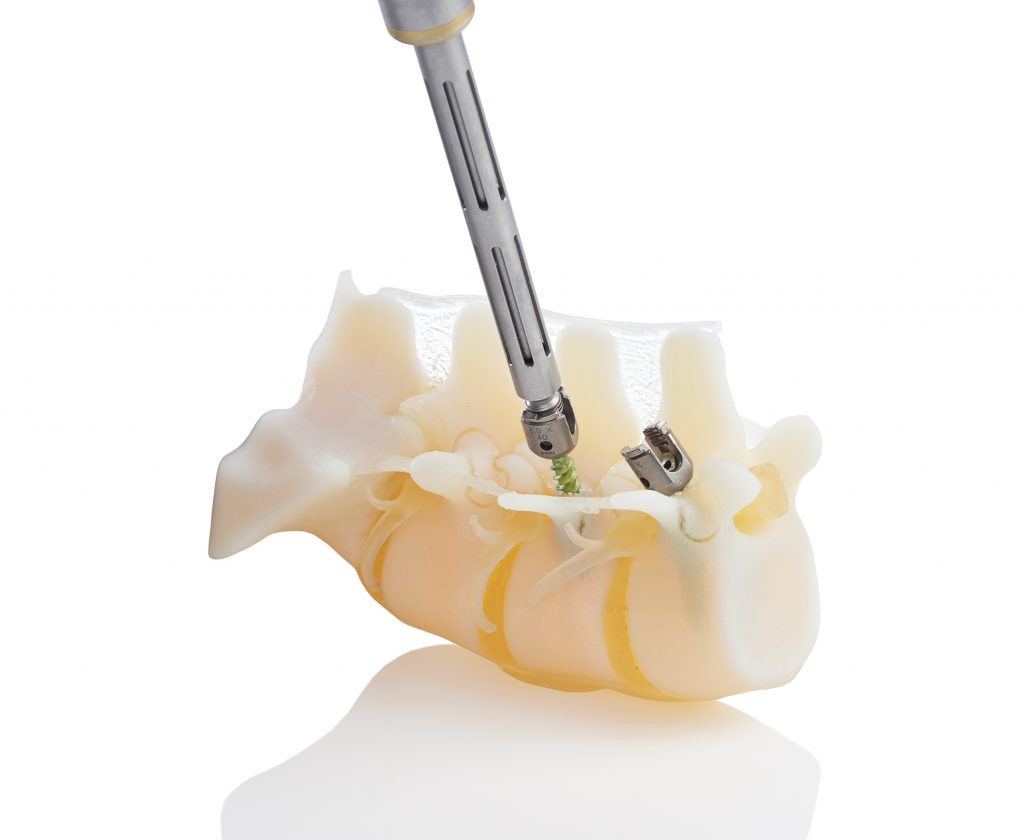
Healthcare has seen continuous development due to advances in 3D printing technology, particularly for surgical planning.
Much like Dexter’s case, 3D printed kidney models were previously used in a medical first at Belfast City Hospital in Northern Ireland.
Conjoined twin separation was successfully performed in New York with thanks to the technology and, in 2017, Stratasys launched the BioMimics range of products specially for custom 3D printed medical models.
In Dexter’s case at Guy’s and St. Thomas’, Chandak asserts,
“This technology has the potential to really enhance and aid our decision-making process both during the pre-surgical planning and in the operating room, and therefore can help in the safety of what is a very complex operation and improve our patient care.”
For more medical success stories subscribe to the 3D Printing Industry newsletter, follow us on Twitter and like us on Facebook.
Looking for a change of scene? Sign up to 3D Printing Jobs here.
Featured image shows Brendan Clark and son, Dexter Clark. Photo via Business Wire.